
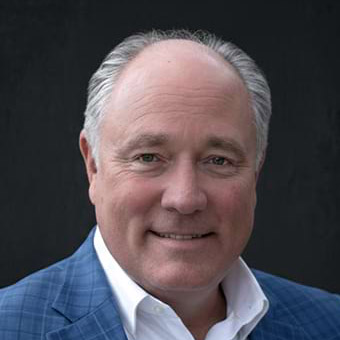
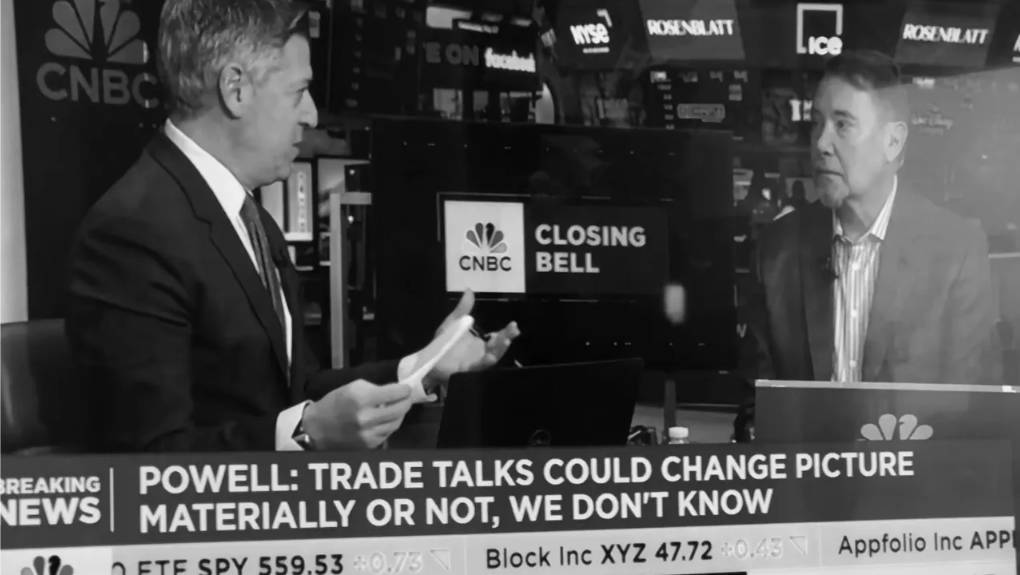
In a recent discussion at the stock exchange, Jeffrey Gundlach, CEO of DoubleLine Capital, provided a detailed analysis of the Federal Reserve’s latest decision and press conference. His commentary, highlights the Fed’s cautious stance amid economic uncertainty, potential recession signals, and evolving market dynamics. Below are the key takeaways and insights for investors navigating this complex landscape.
The Fed’s Stance: Uncertainty and a “Do No Harm” Approach
- Tension in the Fed’s Dual Mandate: Gundlach emphasized the Fed’s struggle to balance its inflation and employment mandates, with Chair Jay Powell repeatedly noting it’s “too early to know” which will take precedence.
- Uncertainty as the Watchword: Powell’s press conference was marked by phrases like “don’t think we know,” reflecting uncharted economic waters driven by tariff uncertainties and rising unemployment pressures.
- Cautious Policy: Powell invoked a Hippocratic “do no harm” approach, repeatedly stating the Fed is in a “good place” and can afford to wait and see, avoiding speculative answers on future rate moves.
- “Mr. Magoo Land” Analogy: Gundlach likened the Fed’s approach to driving blindly, acknowledging risks of higher inflation or unemployment but unable to specify triggers for action, potentially leading to a collision with either a “tariff inflation tree” or a “rising unemployment tree.”
Recession Signals and Economic Indicators
- Rising Unemployment: The unemployment rate is above its 36-month and 12-month moving averages, both historically tied to recessions, prompting close monitoring of employment data.
- Yield Curve Warning: The 2s-10s yield curve, once inverted, has de-inverted, with its 12-month moving average now positive—a condition that has preceded every recession since 1980.
- Long-Term Rates Defy Expectations: Despite 100 basis points of Fed rate cuts, long-term interest rates have risen, bucking typical easing cycle patterns, which Gundlach sees as a sign of structural shifts.
Market Dynamics and Portfolio Strategy
- Interest Rate Trading Range: Interest rates across the yield curve have been stable, but Gundlach predicts rising long-term rates as the economy weakens, challenging conventional recession expectations.
- Debt Burden: The U.S. debt interest expense, now at $4 billion per day, is a growing concern, potentially necessitating radical policies like yield curve control, as seen in the U.S. (1940s–1950s) and Japan.
- Client Consensus: Investors favor liquidity, higher credit quality (e.g., BB, single-A), and shorter durations, expecting a steeper yield curve, a trade that continues to perform despite broad agreement.
- Junk Bond Stress: Lower-quality CCC-rated junk bonds show significantly higher yields, with the BB-CCC yield spread above its 200-day moving average, signaling distress in riskier credits.
- Cash Hoarding: DoubleLine holds more cash than ever, reflecting a “risk-off” intermediate-term outlook, waiting for better opportunities, such as an S&P 500 decline to 4,500–4,600.
Gold’s Rising Appeal
- Stable Amid Volatility: Gold has surged from $2,000 to $3,400 with minimal volatility, unlike other risk assets, signaling a shift in perception.
- New Asset Class Status: Gundlach sees gold as a legitimate asset class, driven by fears of geopolitical turmoil, tariffs, and unsustainable debt, not just speculative or survivalist demand.
- Price Target: He predicts gold could reach $4,000, building on its recent breakout and resilience.
Equity and Investment Horizon
- S&P 500 Outlook: Gundlach targets a support band of 4,500–4,600 for the S&P 500, where he would consider deploying capital for a longer-term horizon.
- 18–24 Month Focus: DoubleLine’s investment strategy, particularly in fixed income, prioritizes an 18-month to 2-year horizon, avoiding short-term trading to balance performance and client expectations.
Illiquidity Risks in Private Markets
- Emerging Concern: Illiquidity in private equity and private credit is a growing issue, exemplified by Harvard’s $53 billion endowment tapping bond markets for operating cash due to 40% exposure to illiquid private equity.
- Endowment Stress: Other endowments are considering exiting illiquid commitments at a loss, signaling broader market stress.
- Retail Investor Risk: Proposals to offer private credit and equity to retail investors via commingled funds raise red flags, reminiscent of pre-crisis exuberance.
Private Credit Under Scrutiny
- Industry Optimism Questioned: At the Milken Conference, figures like John Gray defended private credit, dismissing bubble concerns, but Gundlach remains skeptical.
- Underperformance: Since Gundlach called a top in private credit in September, it has underperformed public credit, validating his caution.
- Flawed Arguments:
- Sharpe Ratio Misleading: Private credit’s lower volatility stems from infrequent mark-to-market, not true risk reduction, with inconsistent valuations (e.g., one client found the same position marked at 95 and 80 by different managers).
- Past Performance Trap: Strong historical returns are not sustainable in an untested, booming market.
- Volatility Fallacy: Claims that private credit shields against public market volatility ignore underlying illiquidity risks, echoing 2007 subprime dismissals.
- Historical Parallel: Gundlach’s 2007 warning on subprime, which proved prescient, informs his current vigilance on private credit as a potential risk.
Fed’s Inflation and Rate Cut Outlook
- Inflation Model: Despite low energy prices (WTI below $60), Gundlach’s model predicts CPI headline inflation could hit 4% by year-end, driven by tariff effects.
- Powell’s Misstep: Powell claimed inflation expectations beyond one year are anchored near 2%, but University of Michigan surveys show 12-month expectations at mid-6% and 5-year at mid-4%, with market pricing at 3% for the next year.
- Rate Cut Opposition: Gundlach opposes rate cuts given rising inflation expectations, warning they could spike long-end yields, fueling the yield curve steepening trade.
- Rate Cut Prediction: He expects two rate cuts by year-end, likely driven by illiquidity issues rather than improved inflation or unemployment data, aligning closer to market expectations (now at 2.5 cuts).
- Fed’s Likely Priority: Unemployment is more likely to concern the Fed than inflation, though Powell noted tariffs could cause a one-time inflation spike.
Tariff Policy and Political Strategy
- Tariff Uncertainty: Powell views tariffs as a potential one-time inflation driver, but their scope and permanence remain unclear, complicating Fed planning.
- Trump’s Calculus: Gundlach believes Trump will accept short-term economic pain from tariffs to avoid midterm fallout, drawing parallels to Reagan’s early-term pain under Volcker, which led to a landslide re-election.
American Exceptionalism Under Pressure
- Momentum Trade: The “American exceptionalism trade” reflects $25 trillion in foreign capital inflows over 18 years, growing the U.S. net investment position to negative $28 trillion.
- Potential Reversal: Geopolitical tensions and Europe’s outperformance (since 2022 for dollar-based investors) could drive $5–10 trillion in capital repatriation.
- Dollar Weakness: Contrary to historical patterns, Gundlach predicts a weaker dollar in the next recession, with bond yields rising, prompting diversified investments in Europe and long-term holds like India.
- Valuation Extremes: U.S. stocks are overvalued relative to global markets, exceeding the Nifty 50 (1970s) and dot-com (1999) peaks, suggesting a correction.
Brand Damage and Elite Resistance
- Elite Critique: Investors like Ken Griffin and Mark Rowan argue Trump’s policies have damaged the U.S. brand, but Gundlach sees this as elite resistance to change that threatens their benefits from trade deficits and budget inefficiencies.
- Example: California’s light rail project, ballooning from $33 billion to $128 billion without track laid, exemplifies entrenched waste elites defend.
Fiscal Challenges and Radical Solutions
- Deficit Surge: The U.S. fiscal deficit annualized at $2.6 trillion (9% of GDP) in the first half of 2025, far exceeding CBO estimates of 5–6%.
- Skepticism on Cuts: Gundlach doubts the administration can achieve a 3% deficit with 3% real GDP growth, as deficit reduction would drag growth.
- Radical Proposals: To address unsustainable debt, options like yield curve control or restructuring foreign-held Treasuries (e.g., extending maturities, cutting rates) are being discussed, signaling potential market disruptions.
Conclusion
Gundlach’s commentary paints a picture of an uncertain economic landscape, with the Fed navigating uncharted waters and markets facing recession risks, illiquidity concerns, and shifting global capital flows. His cautious portfolio strategy, focus on gold, and warnings on private credit offer sophisticated investors a roadmap for the challenges ahead. As he noted, “Good luck everybody out there’s going to be an interesting second half.”